
Types of Plug-and-Play Holiday Lights for Every Home
Plug-and-play holiday lights are ready-to-use lighting systems that require no complex wiring, programming, or technical skill to set up. You connect them to a power source, and they work. These systems typically include pre-wired strings, built-in controllers, and sometimes app or software integration for added effects. The types of plug-and-play holiday lights available today range from simple LED string lights to full animated pixel displays, giving every homeowner a workable option regardless of budget or experience. This guide covers each category in detail so you can choose with confidence.
1. Traditional LED string lights: the classic plug-and-play option
Traditional LED string lights are the most familiar plug-and-play Christmas lights on the market. They come in four main formats: mini lights, icicle lights, net lights, and rope lights. Each format suits a different decorating need, from wrapping trees to draping rooflines.
Why homeowners choose them:
-
Low upfront cost, typically $0.50–$2 per foot for standard sets
-
No programming or app required
-
Available at every hardware and big-box store
-
Flexible placement on trees, fences, gutters, and railings
-
LED holiday lights use 80–90% less energy than incandescent bulbs, cutting utility costs noticeably
Where they fall short:
-
Manual setup and takedown every season adds 2–4 hours of labor annually
-
Fixed colors and static effects limit visual impact
-
Lifespan runs only 1–3 seasons before strings begin failing
The energy savings alone make LED strings worth choosing over incandescent options. That said, the annual labor of untangling, hanging, and storing strings adds up over time, especially for larger homes.
Pro Tip: Buy LED strings rated for outdoor use with an IP44 or higher weather rating. Indoor-rated strings fail quickly when exposed to rain or frost.
2. Pre-lit holiday props and motifs: quick visual focal points
Pre-lit holiday props are decorative figures with lights already built in. You plug them in and place them. Common examples include illuminated reindeer, star toppers, pathway arches, snowflakes, and wreaths with integrated LED bulbs.
What makes them appealing:
-
Immediate visual impact with zero assembly beyond unboxing
-
No wiring decisions or light-count math required
-
Easy to store flat or in original packaging after the season
-
Portable enough to reposition year to year
Where they fall short:
-
Fixed shapes mean you cannot customize the look
-
Damaged sections often require full prop replacement rather than a simple bulb swap
-
Limited to the design the manufacturer chose
Pre-lit props work best as accent pieces rather than a complete display strategy. A pair of illuminated reindeer on a front lawn or a lighted arch over a pathway creates a strong focal point with almost no effort. For porches, driveways, and garden beds, they deliver reliable results season after season with minimal maintenance beyond storing them properly in a dry location.
3. RGB pixel displays and animated kits: modern dynamic options
RGB pixel lights are individually addressable LEDs. Each bulb can display any color independently, which makes animated effects, color chases, and music-synchronized shows possible. This is a fundamentally different technology from traditional string lights, where all bulbs behave as one unit.
Pre-assembled animated kits bring this technology within reach for families with no technical background. A complete kit typically includes a controller, extension cords, pre-installed pixel props, and access to a cloud-based design tool. EZRGB builds its kits around exactly this model, letting you upload a photo of your home, drag and drop decorations onto it, and sync the result to a music track without writing a single line of code.
Advantages of RGB pixel kits:
-
Full color control and animated effects
-
Music synchronization without manual programming
-
Web-based control from your phone or computer
-
Scalable: add more props or strings as your display grows
Pro Tip: Map your outdoor electrical circuits before installing any animated kit. Segment controllers across separate circuits to avoid GFCI breaker trips during startup.
RGB pixel kits represent the best balance of visual impact and ease of use for homeowners who want a show-stopping display without hiring a professional programmer.
4. Permanent architectural lighting systems: year-round, low-maintenance solutions
Permanent LED roofline systems are installed once and stay in place year-round. Channels or tracks mount to eaves, rooflines, and architectural features, and individual pixel nodes sit inside them invisibly until activated. When the holidays arrive, you open an app and choose a scene.
The upfront investment runs $2,500–$6,000 installed, which is significantly higher than any seasonal option. The payoff comes over time. These systems last 10 or more years and eliminate the annual labor of hanging and removing lights. Seasonal setup time drops from 2–4 hours per year to zero.
| Feature | Permanent LED system | Traditional string lights |
|---|---|---|
| Upfront cost | $2,500–$6,000 | $0.50–$2/foot |
| Lifespan | 10+ years | 1–3 seasons |
| Annual labor | None after install | 2–4 hours |
| Effects | App scenes, music sync, zone control | Static or basic flash |
| Year-round use | Yes (security, parties, ambiance) | No |
| Energy cost (annual) | $20–$60 | $50–$100+ |
Permanent systems also serve as year-round architectural lighting, party color effects, and security lighting. That multi-purpose value changes the ROI calculation significantly for homeowners who decorate frequently or have complex rooflines.
Professional installation is the standard approach for permanent systems. Professional installation provides safer, more consistent results than DIY efforts, with better spacing, cleaner cable management, and less risk of gutter or roof trim damage.
5. DIY versus pre-assembled plug-and-play holiday lighting
The plug-and-play category splits into two distinct approaches: DIY kits that require some planning and configuration, and fully pre-assembled systems ready to use out of the box.
DIY plug-and-play kits:
-
You select compatible components (controller, strings, power supply) and assemble them yourself
-
Greater customization over layout, color zones, and effects
-
Potential cost savings if you source components individually
-
Risk of compatibility errors or configuration mistakes
-
Steeper learning curve for first-time users
Pre-assembled plug-and-play systems:
-
Components are tested and matched before shipping
-
No configuration required beyond plugging in and connecting to an app
-
Immediate performance with no troubleshooting
-
Less flexibility to swap individual components
-
Typically priced higher than equivalent DIY builds
The right choice depends on your comfort level and goals. If you enjoy tinkering and want full control over your display, a DIY kit gives you that freedom. If you want a working display the same afternoon you unbox it, a pre-assembled system is the better fit. Families with young children or homeowners decorating for the first time consistently get better results with beginner-friendly pre-assembled options that remove the guesswork from compatibility.
6. Comparing features, costs, and maintenance across all types
Choosing the right option comes down to four factors: budget, desired visual impact, how much time you want to spend on setup, and how long you plan to use the system.
| Type | Cost range | Lifespan | Setup labor | Effects | Best for |
|---|---|---|---|---|---|
| Traditional LED strings | $0.50–$2/foot | 1–3 seasons | 2–4 hrs/year | Static | Budget decorators |
| Pre-lit props | $20–$150/piece | 3–5 seasons | Minimal | Fixed | Accent pieces |
| RGB pixel kits | $25–$40/set+ | 7+ seasons | 1–2 hrs initial | Animated, music sync | Families wanting shows |
| Permanent LED systems | $2,500–$6,000 installed | 10+ years | One-time install | Full app control | Frequent decorators |
Maintenance needs also vary by type. Traditional strings require annual inspection for broken bulbs and frayed cords. Pre-lit props need dry storage and occasional bulb replacement. RGB pixel kits benefit from firmware updates and weatherproof connector checks before each season. Permanent systems need almost no maintenance beyond an annual inspection of mounting hardware.
Energy consumption follows a clear pattern. LED systems use 80–90% less energy than incandescent alternatives. Permanent LED systems cost an estimated $20–$60 per year to run, compared to $50–$100 or more for a traditional incandescent display of similar size.
Pro Tip: Before any large outdoor setup, check your outdoor lighting placement plan against your home’s circuit map. A single 15-amp outdoor circuit handles roughly 1,440 watts, which fills up faster than most homeowners expect.
Key Takeaways
The most effective plug-and-play holiday lighting choice matches your budget, setup time, and desired visual impact to the right system type from the start.
| Point | Details |
|---|---|
| LED strings suit tight budgets | Traditional LED strings cost $0.50–$2/foot and need no programming, but require annual setup labor. |
| RGB pixel kits deliver the best visual impact | Animated kits with music sync create impressive shows without technical skills or programming. |
| Permanent systems offer the best long-term value | A $2,500–$6,000 install lasts 10+ years and eliminates all annual setup labor. |
| Pre-assembled beats DIY for beginners | Tested, compatible components in pre-assembled kits prevent errors and deliver immediate results. |
| Circuit planning prevents failures | Segmenting controllers across circuits stops GFCI trips during large animated display startups. |
Our take on choosing the right holiday lighting
From the EZRGB Team
The most common mistake homeowners make is buying lights based on price alone, then spending three weekends troubleshooting why the display looks nothing like the catalog photo. The type of system you choose should reflect your actual decorating habits, not your aspirations for a single season.
If you decorate every year and spend real time on it, the math on permanent systems is better than most people realize. The annual labor savings alone justify a significant portion of the install cost within five years. For multi-story homes, the safety argument is even stronger. Ladder work on upper rooflines carries real risk, and professional installation removes that entirely.
For families just starting out, the best advice is to begin with a pre-assembled animated kit rather than a traditional string setup. The visual difference is dramatic, and the setup time is comparable. Children engage with animated, music-synced displays in a way that static lights simply do not produce. That engagement turns decorating into a family activity rather than a chore.
One thing the industry underestimates is how much network planning matters for animated displays. A smart lighting system that drops its connection every 20 minutes is more frustrating than impressive. Invest time in your network setup before the season, not during it.
Start simple, plan your circuits, and scale up once you know what your home’s electrical setup can support. The technology available today makes impressive displays genuinely accessible. The barrier is no longer technical skill. It is knowing which system fits your situation.
— EZRGB Team
EZRGB’s all-in-one animated kits for home holiday displays
Animated holiday displays used to require programming knowledge and hours of configuration. EZRGB changes that with complete kits that include controllers, pre-installed pixel props, extension cords, and a cloud-based design tool built for families with no technical background.
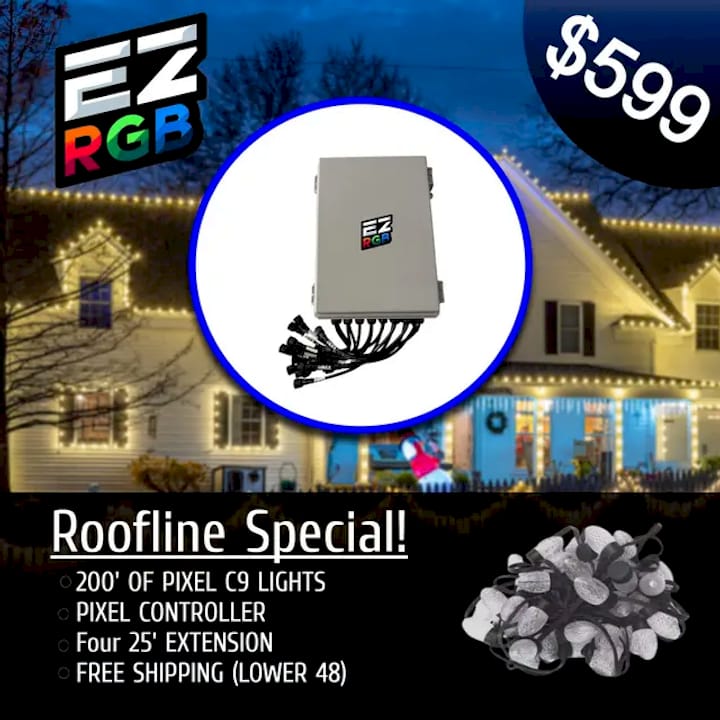
With EZRGB, you upload a photo of your home, place decorations visually on the image, and sync the result to a music track. The system handles the technical coordination. The Roofline Special package gives you everything needed for a complete animated roofline display in one order, with no separate component sourcing required. If you want to understand how holiday lighting controllers work before you buy, EZRGB’s resource library covers that too. The goal is a display you are proud of, set up in an afternoon.
FAQ
What does “plug-and-play” mean for holiday lights?
Plug-and-play holiday lights are pre-wired, ready-to-use systems that require no custom wiring or programming. You connect them to power and they operate immediately, with some systems offering optional app control for added effects.
What are the main types of plug-and-play holiday lights?
The main types are traditional LED string lights, pre-lit decorative props, RGB pixel animated kits, and permanent architectural LED systems. Each type differs in cost, visual impact, and the amount of annual setup labor required.
Are RGB pixel kits hard to set up for beginners?
Pre-assembled RGB pixel kits are designed for beginners. Systems like those from EZRGB include pre-programmed lighting effects and a visual design tool, so no coding or technical configuration is needed.
How much do plug-and-play holiday lighting systems cost?
Costs range from $0.50–$2 per foot for traditional LED strings to $25–$40 per set for smart animated strings, up to $2,500–$6,000 for professionally installed permanent systems. Your budget and how often you decorate determine which tier makes financial sense.
Do plug-and-play lights work safely outdoors?
LED plug-and-play lights rated for outdoor use are safe in typical weather conditions. Choose products with an IP44 or higher weather rating, and follow outdoor safety guidelines to protect connections from moisture and avoid overloading outdoor circuits.
