
What Is a Holiday Show Theme? Ideas and Inspiration

A holiday show theme is a unified creative concept that ties every element of a festive display together, from lighting color and music selection to props and decor style. Think of it as the organizing idea that makes your display feel intentional rather than random. Popular examples include Winter Wonderland, Retro Hollywood, 1920s Gatsby, and Masquerade, each achieved through consistent decor and sensory elements. Without a theme, displays often appear cluttered or visually disorganized. A clear theme solves that problem before you hang a single light.
What is a holiday show theme and why does it matter?
A holiday show theme is the creative backbone of any festive display. It defines the visual language, the mood, and the story your lights and decor tell together. Themes reduce decision fatigue by giving you a filter for every choice you make. When you know your theme is “Winter Wonderland,” you automatically know to reach for cool whites and icy blues instead of warm golds and reds.
Themes are not mandatory, but they deliver a real creative advantage. They help audiences understand and engage with what they are seeing. A display without a theme can still look beautiful, but a themed display tells a story. That story is what makes people stop their cars, pull out their phones, and share what they see.

The practical benefit is just as strong as the aesthetic one. A cohesive theme acts as a narrative arc, guiding the integration of decor, music, and activities so nothing feels out of place. You spend less time second-guessing and more time creating.
How themes guide every creative decision in your display
A well-chosen theme functions as a framework for all your design decisions. It sets the rules for lighting styles, music genres, prop shapes, and color palettes. That consistency is what separates a polished display from a collection of decorations.
Here is how a theme shapes specific choices:
-
Lighting color and style: A “Christmas Classics” theme calls for warm reds, greens, and golds with traditional steady-glow effects. A “Retro Hollywood” theme calls for cool whites and dramatic spotlighting sequences.
-
Music selection: A “1920s Gatsby” theme pairs naturally with big-band jazz remixes. A “Winter Wonderland” theme fits orchestral arrangements or soft acoustic tracks.
-
Props and decor: A “Masquerade” theme uses feathered masks, draped fabrics, and candlelit lanterns. A “Retro Glam” theme uses metallic ornaments, vintage signage, and mirror-ball effects.
-
Color palette: Every theme should have a primary color, a secondary color, and one accent. Sticking to three colors keeps the display from looking chaotic.
The narrative function of a theme goes beyond aesthetics. Your display becomes a story with a beginning, a middle, and an end as viewers walk through or drive past it. That storytelling quality is what makes a display memorable long after the season ends. Themes help keep displays intentional and organized, which audiences notice even if they cannot name exactly why they love what they see.
Pro Tip: Pick your theme before you buy a single decoration. Every purchase decision becomes faster and cheaper when you have a theme to filter against.
What are the most popular holiday show theme concepts?
The range of festive show themes available to decorators is wider than most people realize. You are not limited to “Christmas red and green.” The most engaging displays often take a familiar holiday concept and push it in an unexpected direction.
| Theme | Core Aesthetic | Lighting Style | Music Pairing |
|---|---|---|---|
| Winter Wonderland | Icy blues, whites, silver | Cool white twinkle effects | Orchestral or acoustic |
| Retro Hollywood | Black, gold, cream | Dramatic spotlights, marquee bulbs | Big-band, classic pop |
| 1920s Gatsby | Gold, black, art deco | Warm amber, flicker effects | Jazz, swing |
| Masquerade | Deep purples, golds, black | Color-shifting, theatrical | Classical, dramatic orchestral |
| Christmas Classics | Red, green, gold | Warm steady glow, color chases | Traditional carols |
| Disco Santa | Silver, multicolor | Strobe-style, fast color sequences | Upbeat pop, funk |
Themes can also be blended for originality. A “Retro Glam Winter” concept, for example, combines the icy palette of a Winter Wonderland with the metallic textures of Retro Hollywood. Blending nostalgia with contemporary elements keeps holiday shows fresh and appealing to a wide range of viewers.
Choosing the right theme depends on three factors:
-
Your venue or home: A large roofline suits bold, high-contrast themes like Retro Hollywood. A smaller yard works better with intimate themes like Christmas Classics or Winter Wonderland.
-
Your audience: Families with young children respond well to bright, playful themes. Neighbors who appreciate sophistication may prefer Masquerade or Gatsby.
-
Your resources: Some themes require more props and specialized lighting effects. Start with a theme that matches your current setup, then build from there.
How to plan and implement a holiday show theme step by step
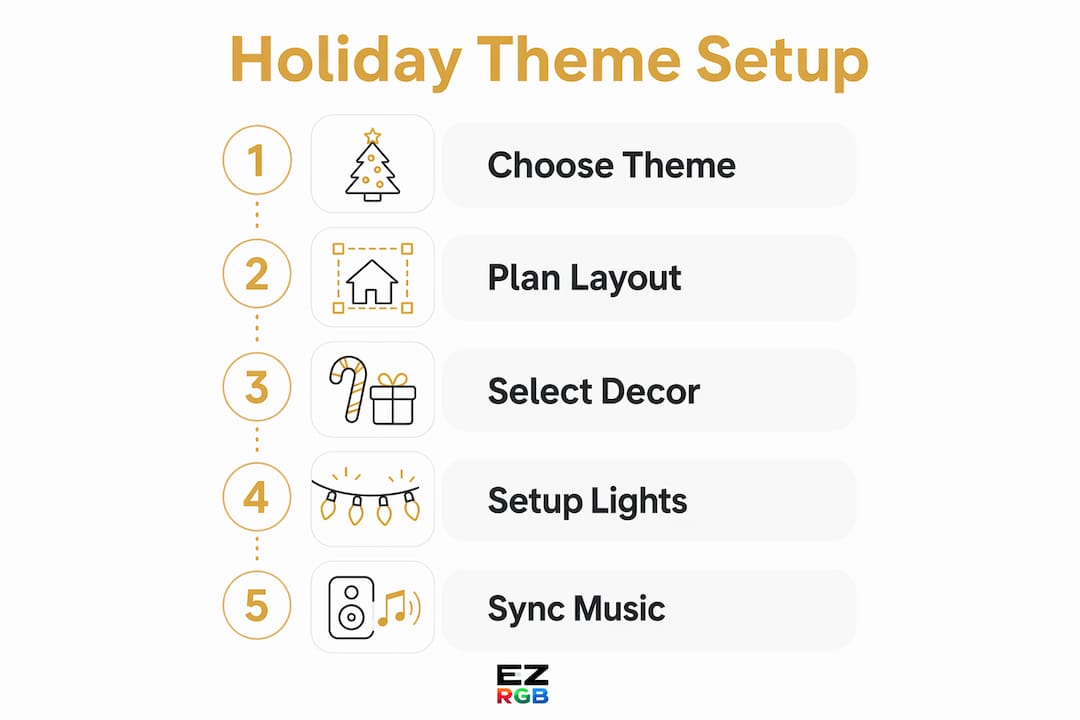
Successful themed displays do not happen overnight. Holiday show preparation follows a phased timeline that starts 8–12 weeks before the event and runs through final fine-tuning in the days before launch. Breaking the process into phases prevents last-minute stress and keeps quality high.
-
Weeks 8–12: Finalize your theme. Choose your concept, define your color palette, and create a shopping list. Confirm your music tracks and lighting sequences at this stage. Decisions made early cost less to change than decisions made at week two.
-
Weeks 5–7: Prepare your zones. Zoning distinct functional areas like photo spots, activity corners, and a main focal point improves guest flow and elevates the overall experience. Assign a specific part of your theme to each zone. For example, your front walkway might carry the “arrival” mood of your theme, while your main display area delivers the full visual impact.
-
Weeks 3–4: Install and test. Hang lights, place props, and run your lighting sequences. Test every element in the dark to see how it reads at night. Adjust placement and timing based on what you see.
-
Week 1–2: Fine-tune and synchronize. Align your lighting sequences with your music tracks. Check that every zone connects visually to the others. Walk through the display from a viewer’s perspective and fix anything that breaks the theme’s consistency.
-
Launch day: Final check. Run a full dress rehearsal at dusk. Confirm all timers, controllers, and sequences are set correctly before your first audience arrives.
Pro Tip: Use a holiday display planner to map your zones on paper before you install anything. A simple sketch saves hours of repositioning later.
How sensory integration makes holiday themes unforgettable
The most memorable themed displays engage more than just the eyes. Modern holiday shows integrate sensory layers including synchronized lighting, remixed music, and props to create experiences that feel fully immersive. Professional productions like the Thursford Christmas Spectacular feature complex stages and sophisticated lighting and sound design. You can apply the same principles at home on a smaller scale.
Sensory integration works through four channels:
-
Visual: Synchronized animated lighting effects that change with the music create movement and energy. Static lights look beautiful, but animated lights create an experience.
-
Auditory: Music is the emotional engine of any themed display. A well-chosen track makes viewers feel the theme before they consciously register it.
-
Olfactory: Scent-scaping alongside lighting and music enhances the psychological impact of a holiday display. Simmering cider near an entrance, pine scent diffusers along a walkway, or cinnamon near a seating area all reinforce the theme without a single additional light. These are scents we use in our shows.
-
Tactile: Textured props, soft fabric draping, and interactive elements like a photo booth give viewers something to touch and engage with physically.
“Family-friendly holiday shows often incorporate sophisticated lighting and sound technology to create experiences that feel both accessible and genuinely impressive. The technology does not need to be complex to be effective. It needs to be intentional.”
Cirque du Soleil’s reimagining of holiday stories with acrobatics and remixed soundtracks is a professional example of this principle. The core technique, pairing familiar holiday content with unexpected sensory twists, works at any scale. Your home display can use the same logic by pairing a classic theme with a modern music remix and one unexpected scent or prop.
Key Takeaways
A holiday show theme is the single most effective tool for turning a collection of decorations into a cohesive, memorable display that engages viewers on every sensory level.
| Point | Details |
|---|---|
| Define your theme first | Choose your concept before buying anything to filter every decision efficiently. |
| Themes reduce decision fatigue | A clear theme eliminates guesswork about colors, music, and props. |
| Zoning improves flow | Dividing your display into functional zones creates better guest movement and stronger immersion. |
| Sensory layers deepen impact | Combining lighting, music, and scent makes a display more emotionally memorable. |
| Plan 8–12 weeks out | Starting early gives you time to test, adjust, and fine-tune without stress. |
Why themes changed how we think about holiday decorating
From the EZRGB Team’s perspective, the shift toward themed holiday displays is one of the most meaningful changes in home decorating over the past decade. We have seen decorators go from “more is more” to “more of the right thing is everything.” That shift is what themes make possible.
The most common mistake we see is choosing a theme too late. Decorators pick their lights, buy their props, and then try to retrofit a theme onto what they already have. The result is a display that almost coheres but never quite lands. The fix is simple: theme first, everything else second.
We are also watching a clear trend toward blending nostalgia with modern technology. A “Christmas Classics” theme built on pixel lighting and music synchronization hits differently than the same theme built on static bulbs. The emotional warmth of the classic theme gets amplified by the precision of modern pre-programmed lighting effects. That combination is where the most impressive home displays live right now.
The good news is that you do not need a professional production budget to get there. You need a clear theme, a solid plan, and the right tools.
— EZRGB Team
EZRGB makes themed holiday light shows accessible
Choosing a theme is the creative part. Bringing it to life with synchronized, animated lighting is where EZRGB comes in.
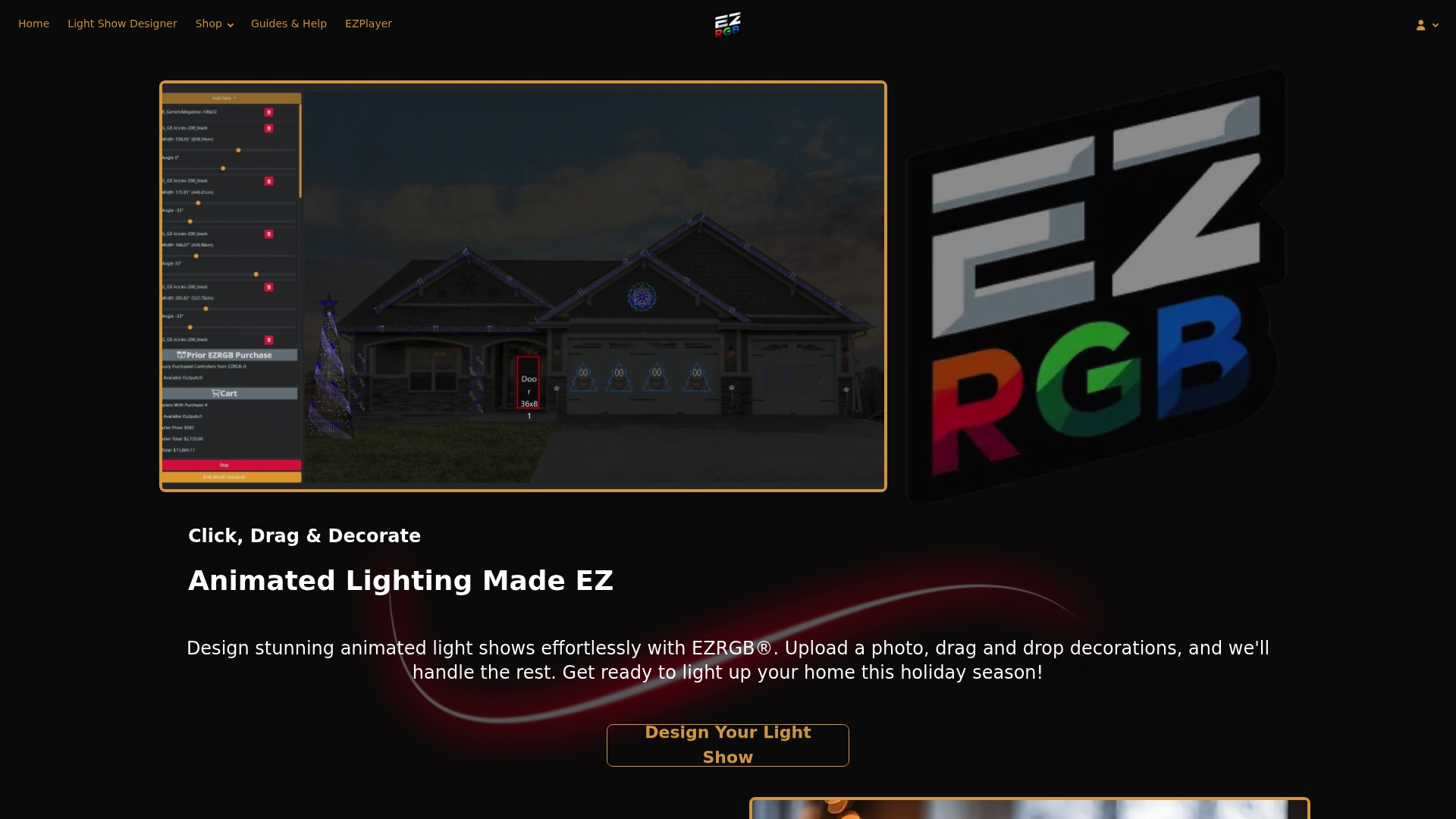
EZRGB’s Christmas Light Show Kit 1 gives you everything you need to run a fully synchronized, music-matched display without any technical background. The platform lets you upload a photo of your home, place pixel lighting props, and sync them to your chosen music tracks in minutes. For decorators who want a specific themed look, EZRGB’s holiday lighting guides walk you through theme selection, zone planning, and lighting placement from start to finish. Whether you are building your first themed display or upgrading an existing one, EZRGB has the kits, props, and support to get you there.
FAQ
What is a holiday show theme in simple terms?
A holiday show theme is a unified creative concept that connects all elements of a festive display, including lighting, music, decor, and props, into one cohesive visual story.
What are the most popular holiday show themes?
The most popular themes include Winter Wonderland, Retro Hollywood, 1920s Gatsby, Masquerade, Christmas Classics, and Disco Santa, each defined by a distinct color palette, lighting style, and music pairing.
How do I choose the right theme for my holiday display?
Choose a theme based on your venue size, your audience’s preferences, and the lighting and prop resources you have available. Simpler themes like Christmas Classics work well for beginners, while Retro Hollywood or Masquerade suit larger or more elaborate setups.
How far in advance should I plan a themed holiday display?
Start your planning 8–12 weeks before your display launch date. Use the first phase to finalize your theme and shopping list, then move into installation and testing in the weeks that follow.
Can I blend two holiday themes together?
Yes. Blending themes, such as combining Winter Wonderland’s cool palette with Retro Hollywood’s dramatic lighting, creates original displays that stand out. Keep your color palette to three colors maximum to maintain visual clarity.
